
Most production delays don’t come from difficult repairs.
They come from friction.
And one of the biggest sources of friction is simple:
👉 Vehicles that can’t move. In many shops, that’s 30–90 minutes lost per repair.
THE HIDDEN COST OF IMMOBILE VEHICLES
When a vehicle can’t roll, everything around it slows down:
- Bays stay occupied 2–3x longer
- Technicians lose 30–90 minutes per repair working around limitations
- Blueprinting and teardown get delayed
- Work stops between departments
It never shows up on the repair order.
But across a week?
👉 Across a 5-tech shop, that can mean losing an entire day of production every week.
WHERE THIS SHOWS UP
In most shops, this happens daily:
- Suspension damage
- Missing wheels
- Drivetrain issues
- Vehicles mid-teardown
So technicians improvise:
- Floor jacks
- Dragging vehicles
- Blocking bays longer than necessary
If this is happening in your shop, you don’t have a technician problem. You have a system problem.
WHY THIS MATTERS MORE NOW
In high-volume shops, flow is everything.
When one vehicle stops moving:
- The bay becomes a bottleneck
- The next job waits
- The schedule slips
Multiply that across the shop:
👉 You don’t have a repair problem
👉 You have a production flow problem
WHAT HIGH-PERFORMING SHOPS DO DIFFERENTLY
They don’t work around immobile vehicles.
They remove the constraint entirely.
The rule is simple:
👉 Every vehicle should be able to move at every stage of repair
That changes everything:
- Work continues without interruption
- Bays turn faster
- Technicians stay productive
THE ROLE OF VEHICLE DOLLY SYSTEMS
Shops that fix this don’t manage around immobile vehicles, they eliminate them.
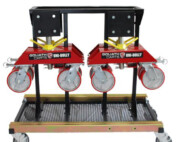
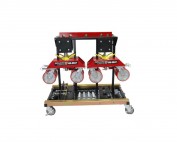
Systems like the UNI-DOLLY allow:
- Frame-supported movement
- Wheel hub support
- Safe transport across all stages of repair
Instead of waiting or working around limitations, technicians keep production moving.
MONDAY MORNING TEST
Try this tomorrow:
- Identify one vehicle currently stuck in a bay
- Track how long it stays immobile
- Count how many times work is delayed because of it
Then ask:
👉 Should that vehicle have been able to move?
Because in high-performing shops, it always can. The fastest shops don’t just fix cars faster, they make sure nothing in the process ever gets stuck.